Mission Statement
We are building the next generation of innovators who are technically capable, confident in their abilities and prepared to excel as future scientists, engineers and leaders.
Framework
The Orbit Model
O² programs are organized into Orbits — structured learning pathways built around real-world systems and measurable outcomes. Each Orbit combines:
Applied technical instruction
Real engineering concepts taught through doing, not just reading.
Hands-on system building or design
Students build functional systems from real components.
Performance-based mastery validation
Skills verified through demonstrations and challenges.
Credential or industry-aligned outcome
Every Orbit ends with a tangible, recognized outcome.
The Orbit Model ensures students leave inspired and qualified.
Meet the Founder
Dr. Anaiya Reliford
Founder & Lead Instructor
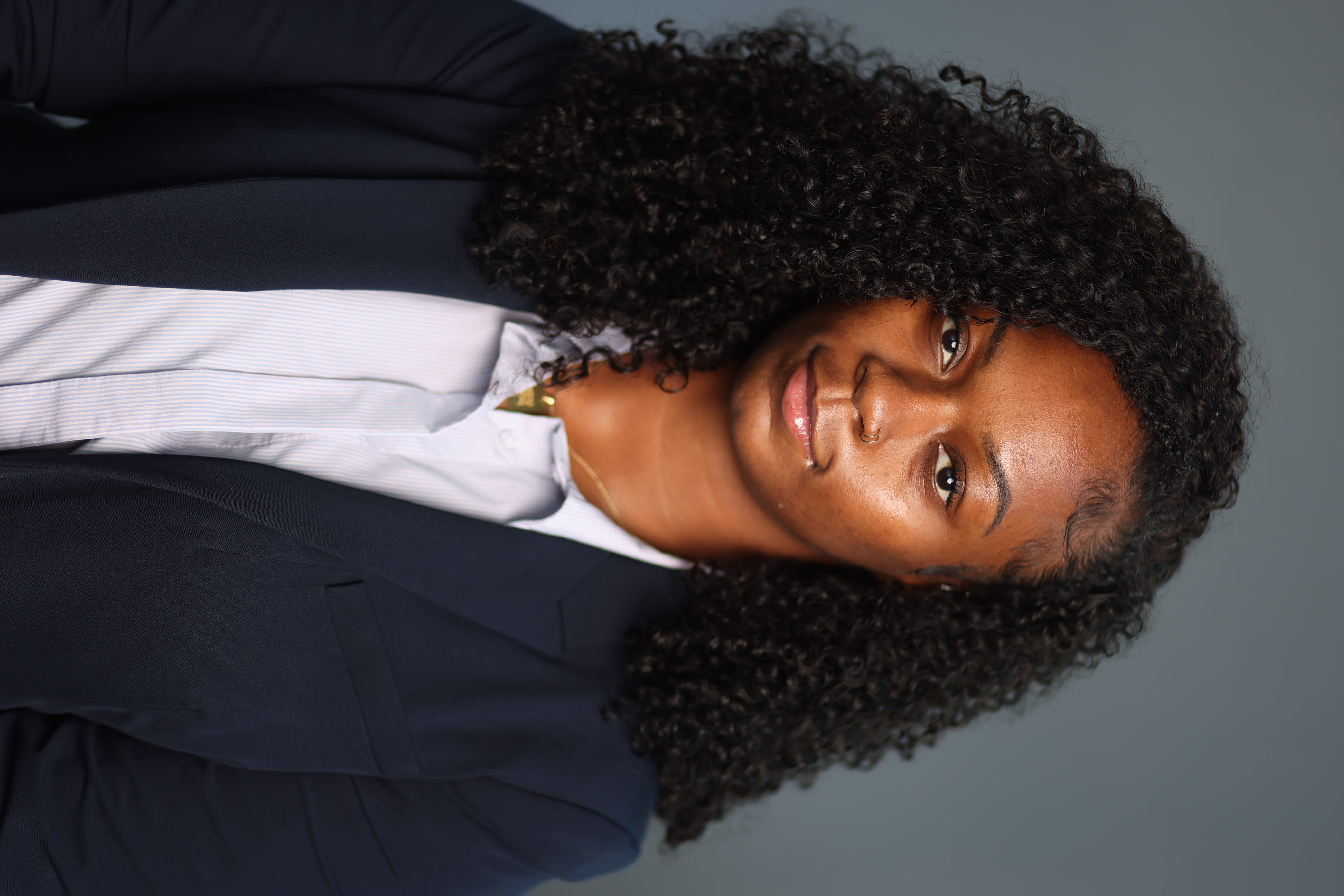
Dr. Anaiya Reliford is an aerospace researcher, educator, and mentor who believes technical capability should be accessible to students long before they reach college or the workforce.
Her career sits at the intersection of autonomy, sensing, and aerospace systems. She currently serves as a Senior Research Scientist at the Research Institute for Tactical Autonomy, where her work focuses on intelligent decision-making, adaptive mission execution, and human–machine teaming in real-world air and space operations.
Her research and engineering experience includes work with:
NASA Goddard Space Flight Center
NOAA Air Resources Laboratory
Lockheed Martin Advanced Technology Center
Federal Bureau of Investigation
Howard University
FAA Part 107 Licensed Remote Pilot
These experiences span satellite remote sensing, atmospheric measurements, autonomous systems research, and environmental sensing technologies.
Beyond her research work, Dr. Reliford actively contributes to the advancement of uncrewed and autonomous aerospace systems through leadership within the American Institute of Aeronautics and Astronautics (AIAA). She serves as Technical Discipline Chair for both the Uncrewed and Autonomous Systems Integration Committee and the Sensor Systems and Information Fusion Technical Committee, helping guide technical collaboration in areas such as distributed sensing, autonomy, and intelligent systems.
She is also a member of the Committee on Measurements within the American Meteorological Society (AMS), supporting the advancement of atmospheric observation and measurement science.
For more than a decade, Dr. Reliford has mentored students in robotics, engineering design, and aerodynamics. Through this work, she recognized a gap between inspiration and technical capability in STEM education.
Orbit of Opportunity (O²) was created to bridge that gap.
O² programs are designed to give innovators the opportunity to build real systems, develop measurable technical skills, and earn credentials that connect learning to real-world opportunity.
Why I Built O²
I grew up in Stockton, California, a city where curiosity was abundant, but opportunities to explore that curiosity, especially in STEM, were not.
I was always strong in math and science. I finished my classwork quickly. I did my homework. But what I craved most was the part of school that let me build something.
Some of my earliest memories are of turning simple posterboard project assignments into three-dimensional experiences. For a project on habitats, I built the Nile River using dough for land, gel for water, and miniature figures for aquatic life and vegetation. For a 7th grade biology project, I built a fully edible cell model, constructing each organelle from candy and food items, simply because I wanted to do something exciting.
None of these project deliverables required a tangible product of that caliber. I chose to make them that way because it brought me immense joy to be creative and use my hands to solve problems. Building made learning come alive.
At sixteen, I moved across the country to attend Howard University. As I progressed through my studies and into internships and research environments, another pattern became clear. Very few of the students and professionals in these spaces looked like me. I was succeeding, but I was often one of the only ones.
I learned that middle school is the age when many students begin imagining possible careers. That led me to begin working with youth, designing small projects, and tutoring both privately and in groups so students could build strong foundations in math and science.
But over time, I realized something deeper. Tutoring alone is not enough. Exposure alone is not enough. There is a major gap between learning concepts and applying them, especially for students from under-resourced communities.
Not because they lack ability, but because they were never given the chance to practice.
I built Orbit of Opportunity to break the cycle. Consistent, high-quality, hands-on STEM experiences transform curiosity into confidence.
At O², students do not just learn about engineering, coding, or science.
Orbit of Opportunity exists because talent is everywhere. Opportunity is not. We are here to change that.
Join the mission.
Whether you're a student, educator, or organization — there's a place for you in the orbit.